 Search Engines
Your Website’s “Accidental” Success Stories
Most non-profit leaders and small business owners are hyper-focused on Google Analytics. They track page views, bounce rates, and donation conversions. But there’s a massive problem: Google Analytics tells you what people do after they arrive at your site. It doesn’t tell you the real, unfiltered story of what they were looking for before they clicked. To find that hidden data goldmine, you have to look somewhere else entirely: Google Search Console (GSC).
If you aren’t logging into Search Console at least once a month, you are leaving thousands of free organic impressions on the table. Here is how to find the “accidental” search terms you are already ranking for, and how to use them to unlock major growth.
The Dashboard View You’re Missing
When you open up your GSC Performance report, you’ll see a chart that looks like this:
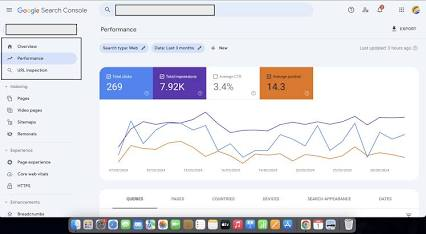
Look closely at the columns below that main graph. You aren’t just looking at total numbers; you’re looking for the gap between two specific metrics: Impressions (how many times your site showed up in a search result) and Clicks (how many people actually visited).
Here is how to turn that data gap into an immediate strategy.
1. Identify Your “Near-Miss” Keywords
Scroll down to your queries list and sort by Impressions from high to low. Look for terms where your impressions are massive, but your clicks are tiny (or zero).
- What it means: Google already thinks your website is relevant enough to show it to searchers. But because you don’t have a dedicated page or paragraph answering that exact question, your actual rank is sitting on page two or three where nobody clicks.
- The Strategy: Take that exact high-impression keyword and use it to build a new blog post or update an existing FAQ page. You already have Google’s permission to rank for it—you just need to give them better content to justify moving you to page one.
2. Spot Your “Accidental” Traffic
Sometimes, you’ll find people are finding your site through highly specific, unexpected long-tail phrases. For example, a local community kitchen might discover they are getting 500 impressions a month for “where to donate fresh garden surplus near me” because of a single sentence hidden in an old volunteer update.
- The Strategy: Don’t let accidental wins stay accidental. Turn that surprise query into a core asset. Pull that content out into its own dedicated page, optimize your headings around it, and make sure it paths directly to your primary goal (like a volunteer sign-up form).
3. Diagnose Low Click-Through Rates (CTR)
If you find a query where you rank in position 3 or 4, but your click-through rate is under 2%, your “storefront window” is broken. People are seeing your link on Google, but they’re choosing to click on your competitors instead.
- The Strategy: This is a clear indicator that your SEO meta description or page title is boring, outdated, or cut off. Update your snippet to include a strong call-to-action or a direct answer to the searcher’s intent to instantly steal clicks without needing to move up a single spot in rank.
Data Over Guesswork
Stop trying to guess what keywords your audience cares about. Your audience is already telling you exactly what they want every single day inside your Google Search Console account. By logging in, listening to the data, and adjusting your content to meet them where they are searching, you turn passive impressions into active supporters.